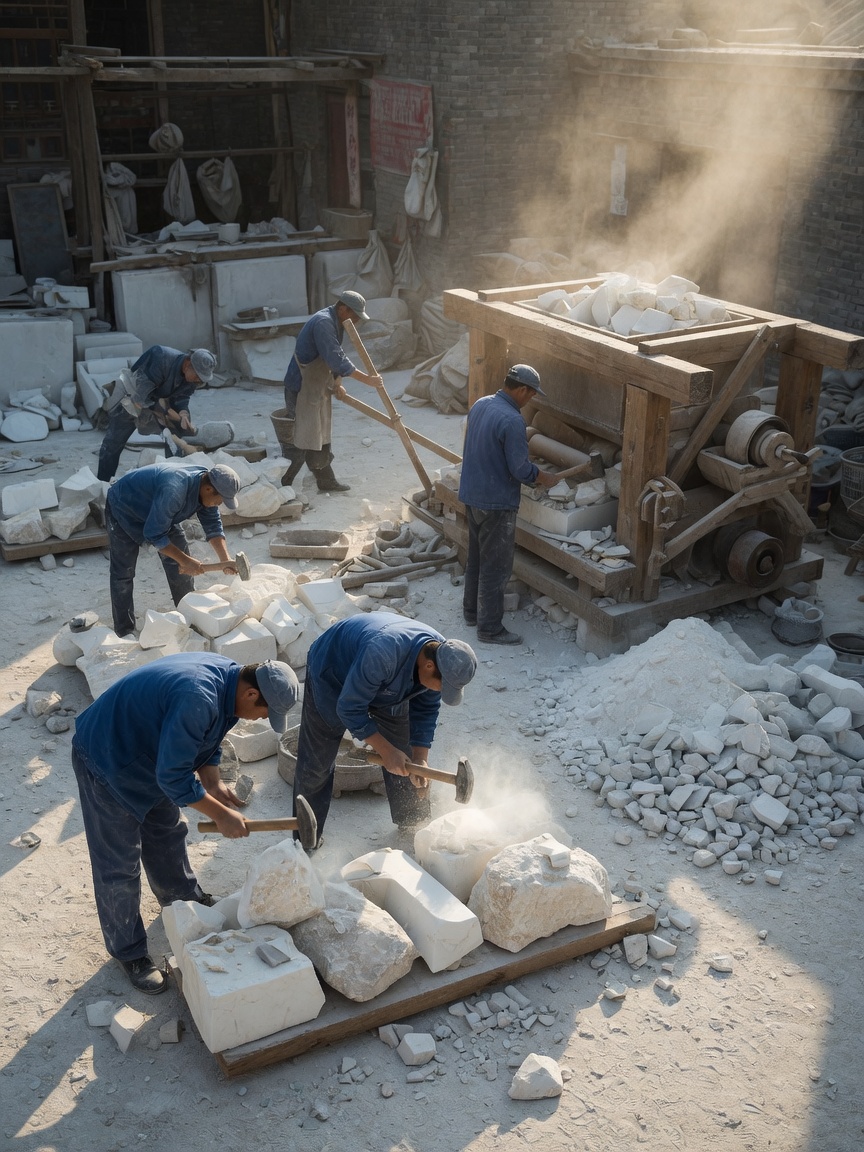
Raw Material
The Clay Bench
Porcelain stone is refined in Jingdezhen before any Qingci piece is thrown or pressed. The body decides whiteness and ring.
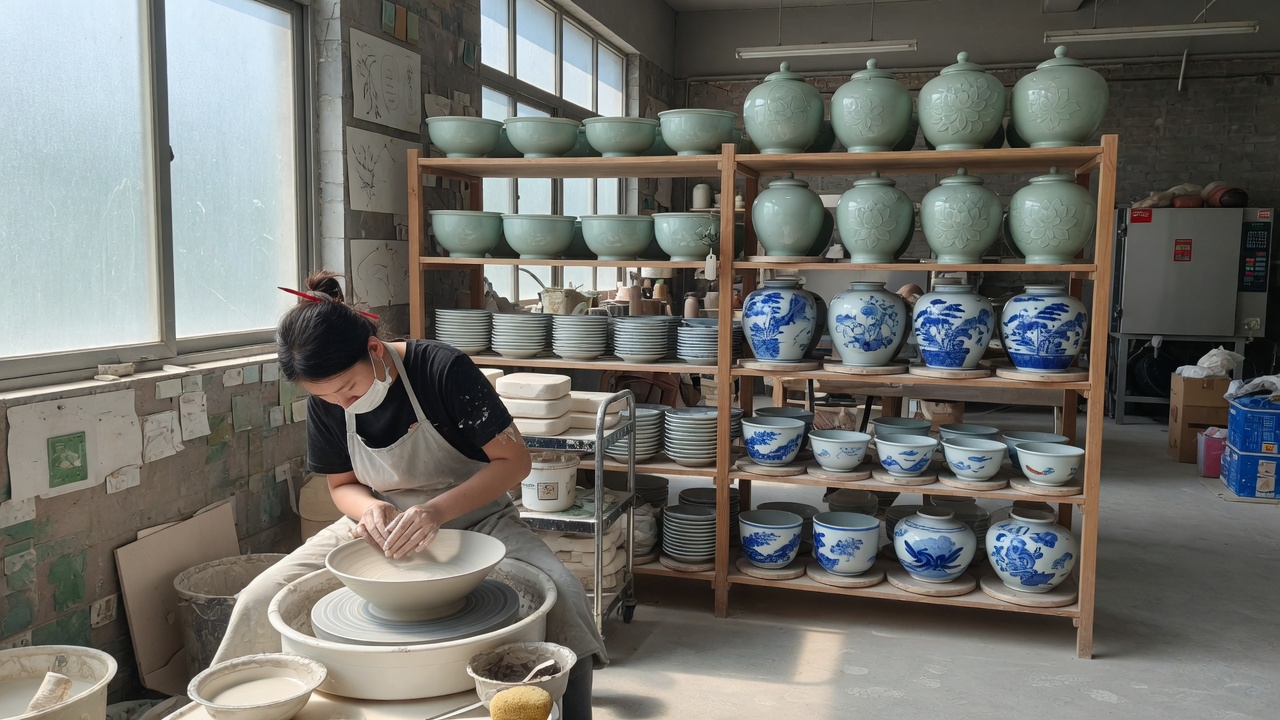
Studio
Every piece comes from a Jingdezhen workshop. The method — thrown, moulded, painted, or glaze-fired — is named on the product page.
Porcelain stone is refined in Jingdezhen before any Qingci piece is thrown or pressed. The body decides whiteness and ring.
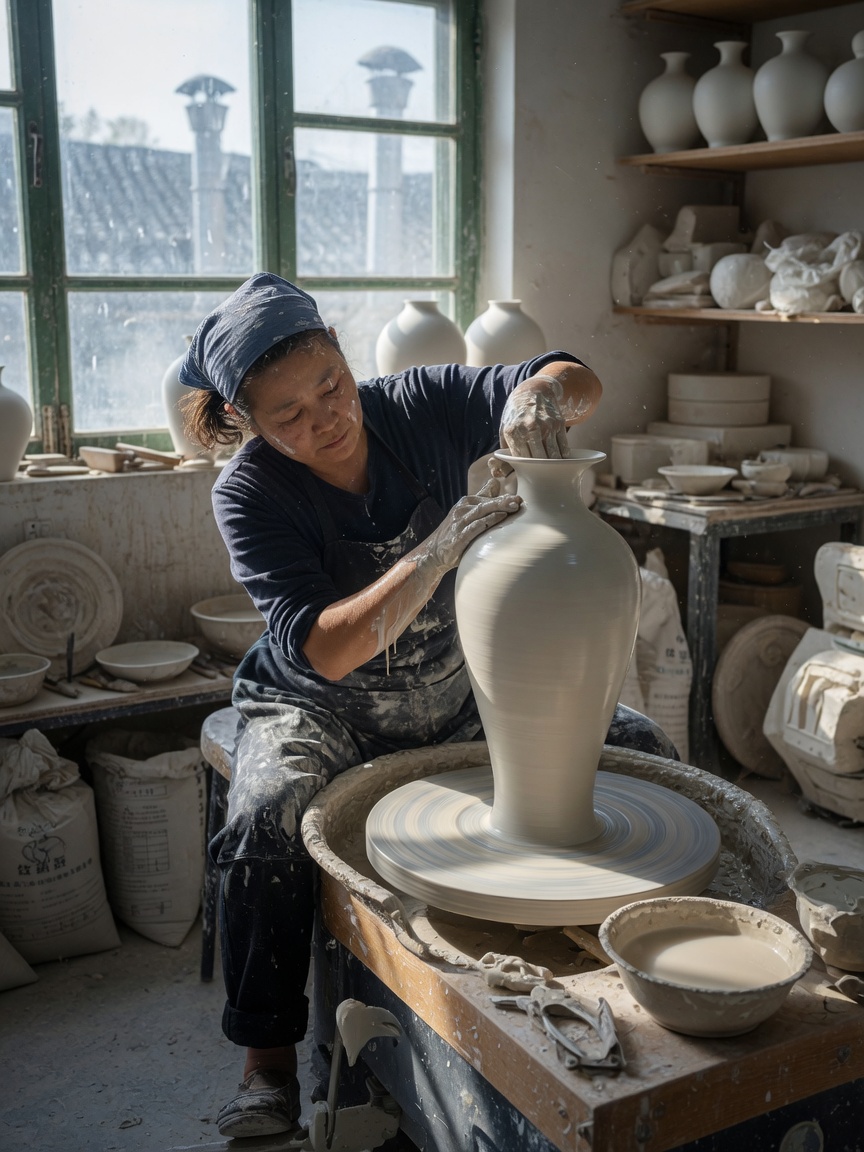
Gaiwan, teapot, and jar silhouettes are raised by hand. Proportion is judged while the clay is still moving.
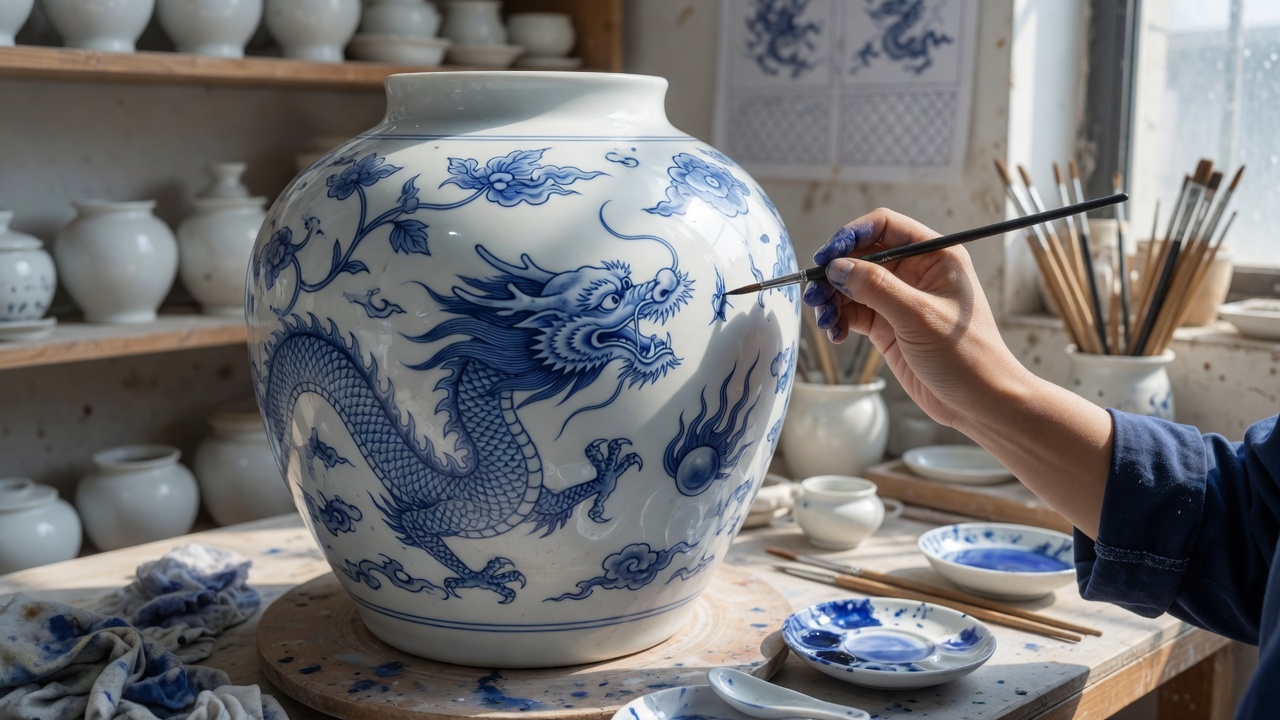
Underglaze blue, famille-style color, and kiln-change glazes are applied in small workshops around the city.
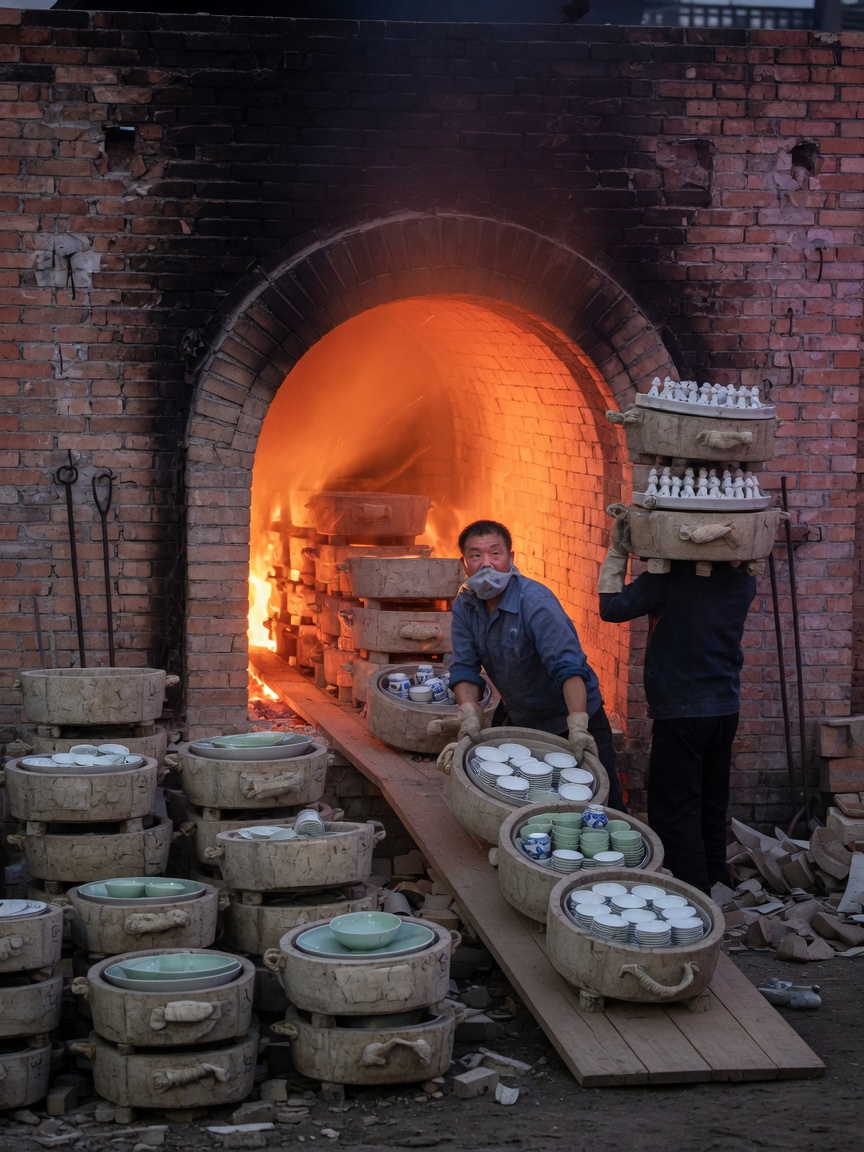
Most house pieces are high-fired porcelain. The kiln-change cubes on our charm wall are a living record of that heat.
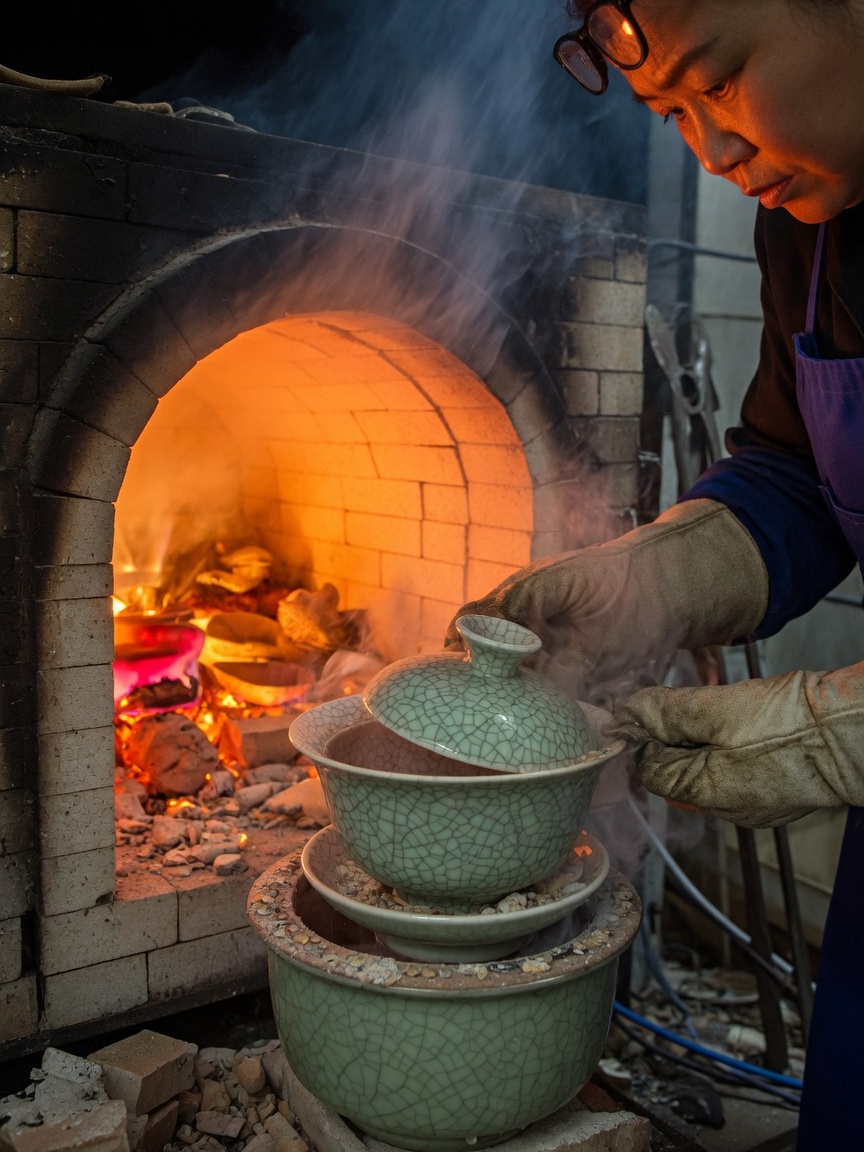
We state the actual process on each product page. A piece is only called hand-painted when it is.
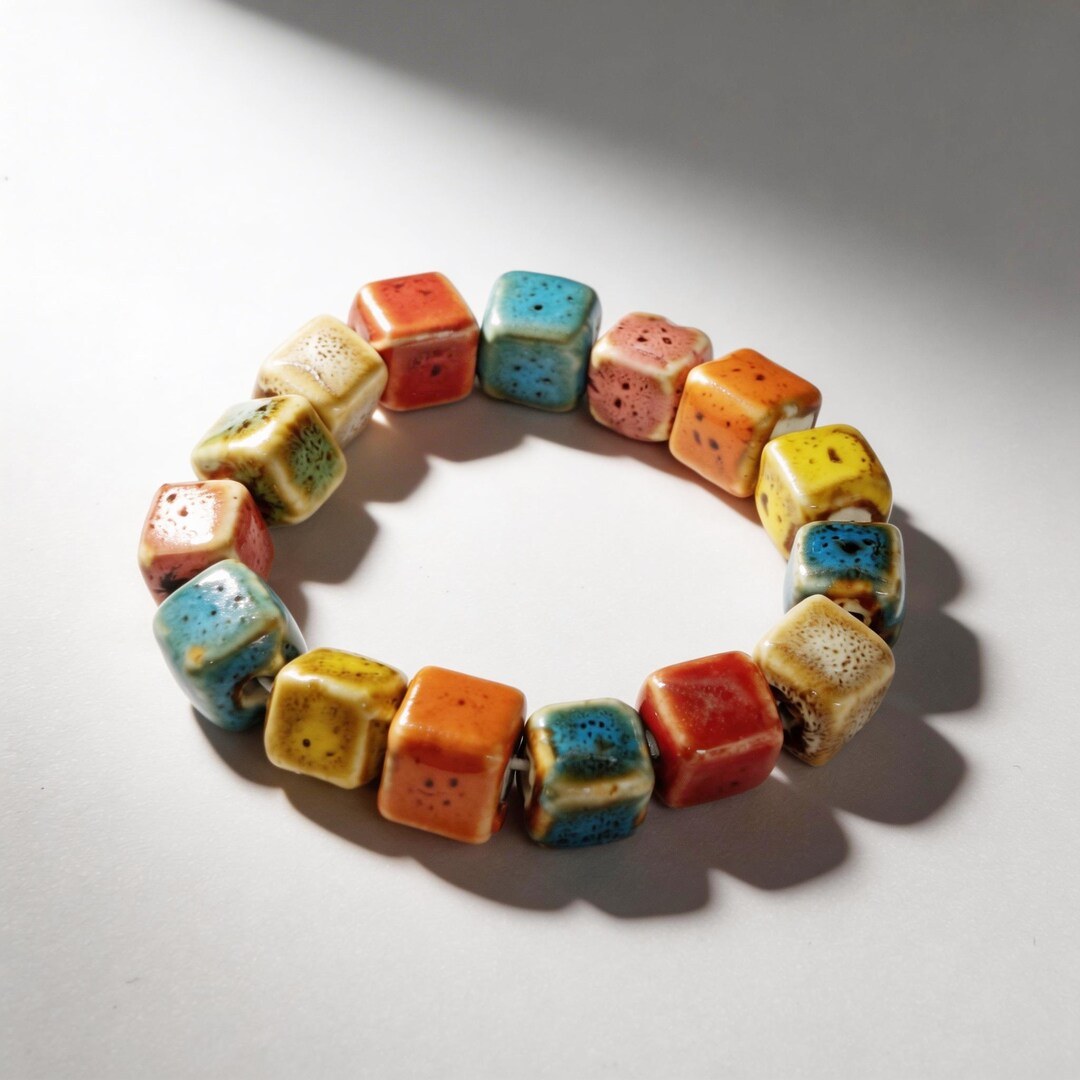
Playful ceramic beads — cats, stars, flambe cubes — are selected from Jingdezhen glaze experiments for everyday wear.
Qingci is a selection house. Pieces are chosen in Jingdezhen from small workshops and kilns; we do not claim to have thrown or painted them ourselves, and we do not put a master's name on work we cannot verify.
Ring and body on a tap test, glaze evenness, foot finish, lid and spout fit on tea ware, and whether the decoration is actually brushwork. Pieces that fail go back.
Material, form, capacity, care, and the item code appear on every product page, taken from the same record we use to pack the order.
We do not invent artisan biographies, we do not stage awards, and we do not publish a review we did not receive. Where we lack information — exact dimensions on some pieces, for example — the page stays silent rather than guessing.
These terms appear across the product pages. This is exactly what each one means when we use it.
Scan or search the mobile number. We reply in English and Chinese within one business day.
+86 177 7985 2180
admin@porcelaincharm.com
For an existing order, use the order lookup page first.