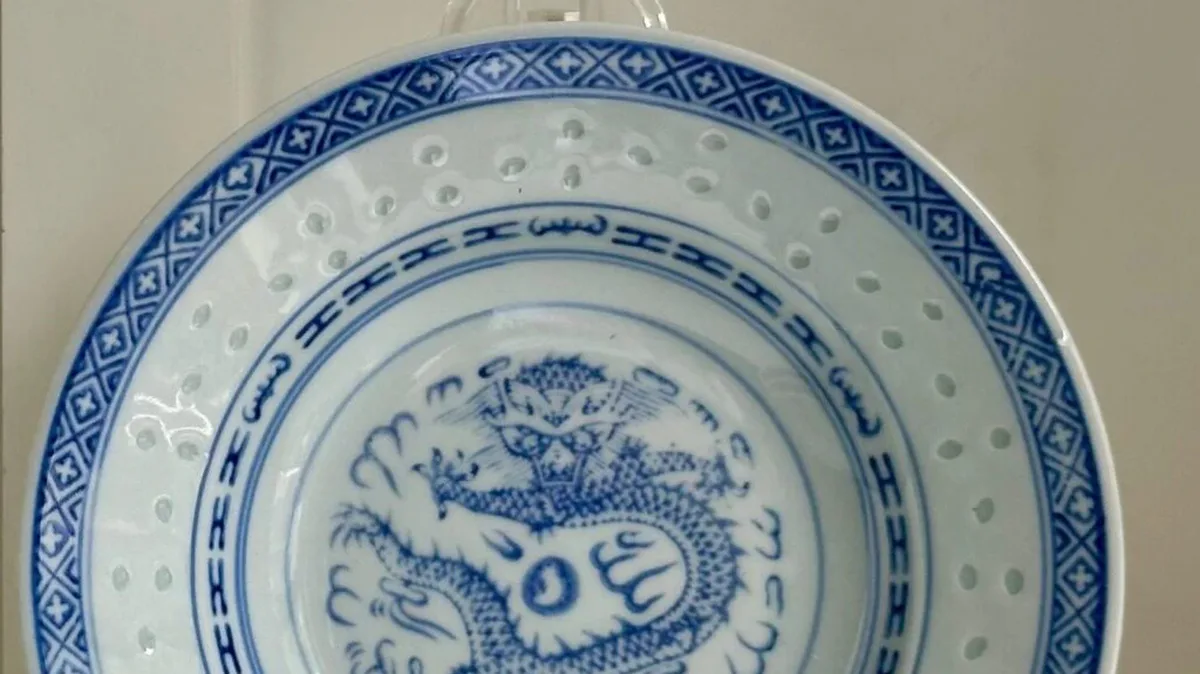
Quick answer: Rice-grain porcelain, called linglong (玲珑瓷, líng lóng cí) in Chinese, is porcelain with tiny rice-shaped openings cut right through the wall and then sealed with glaze. After firing, the glaze in each opening becomes a small window of glass. Hold the piece up to the light and the “grains” glow, yet the bowl or cup is completely watertight. It is counted among Jingdezhen’s four famous porcelains, alongside blue-and-white, famille rose and colour-glazed wares, and it is most often paired with blue-and-white painting.
In an ordinary product photo it is easy to miss what makes linglong special. The pattern only shows its second layer when light passes through it. Here is how the grains are made, how to check that a piece is the real thing, and how to look after it.
Why it’s called linglong
Linglong describes something delicate and finely pierced — the word is used for carved jade and filigree as well as porcelain. In English the ware is usually named after the shape of its openings: small ovals that look like grains of rice pressed into the wall.
How rice-grain porcelain is made
A linglong piece starts the same way as any Jingdezhen porcelain: thrown on the wheel, then trimmed thin once it is leather-hard. (Our guide to how blue-and-white porcelain is made shows those stages in footage filmed at a Jingdezhen workshop we buy from, used with permission.) Then come the steps that are unique to it:
- Cutting the grains. While the clay is still leather-hard, small rice-shaped openings are cut clean through the wall with a fine blade, usually in rings, bands or flower shapes. Spacing matters: cut them too close together and the wall loses strength; too far apart and the pattern looks thin.
- Filling with glaze. The openings are filled with glaze, often in several coats, until each one is sealed.
- Painting and glazing. In blue-and-white linglong, the cobalt design is painted around the grain pattern so the two decorations frame each other. The whole piece is then covered in clear glaze.
- High firing. In the kiln the body vitrifies and the glaze in each opening melts into clear glass. Because the glaze there is much thicker than on the rest of the surface, the grains often show a faint blue-green tint.
How to check that it’s real rice-grain porcelain
- Hold it up to the light. This is the test that matters. Real grains are glass windows, so they glow as bright dots against a window or a phone torch. If the dots don’t let light through, you are looking at a painted or moulded imitation of the pattern, not linglong.
- Run a fingertip over the grains. The glaze fills the openings, so the surface should feel smooth. Small dips in the glaze are normal.
- Fill it with water. Sealed grains don’t leak. A piece with open holes is openwork (reticulated) porcelain, which is decorative rather than something you drink from.
- Look at the tint. Against the white body, the glass-filled grains usually look slightly blue-green or watery.
Is rice-grain porcelain practical for everyday use?
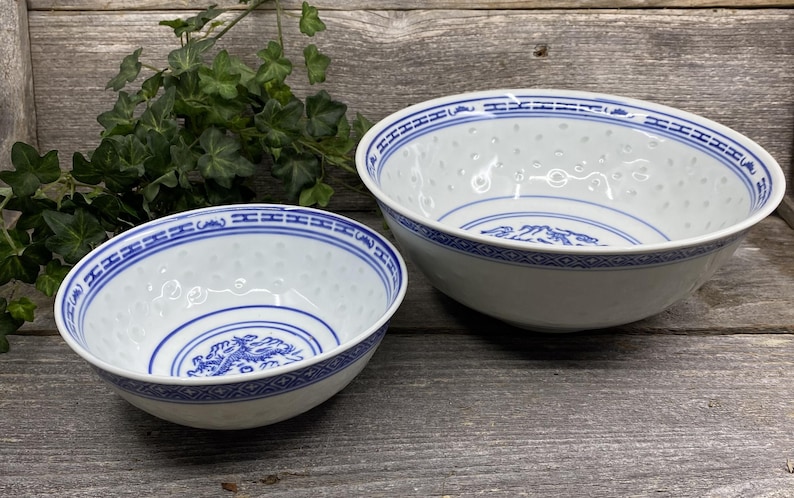
Yes. In China linglong has long been everyday tableware: rice bowls, spoons, tea cups and plates. The windows are sealed with glass, so they hold hot tea or soup like any other porcelain. Treat it as you would any thin porcelain: hand washing is gentlest on the translucent sections, and it’s best to avoid sudden temperature changes, like taking a cold bowl straight from the fridge into very hot water. Our porcelain cup care guide has the details, and each product page lists the care notes for that piece.
To compare surface decoration, read overglaze vs underglaze porcelain. That guide complements the checks above; use the material and care information for the specific piece when choosing tableware.
Rice-grain pieces in our shop
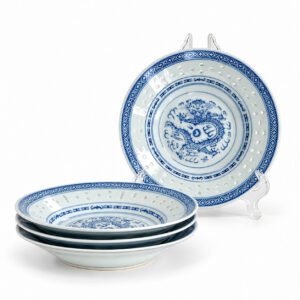
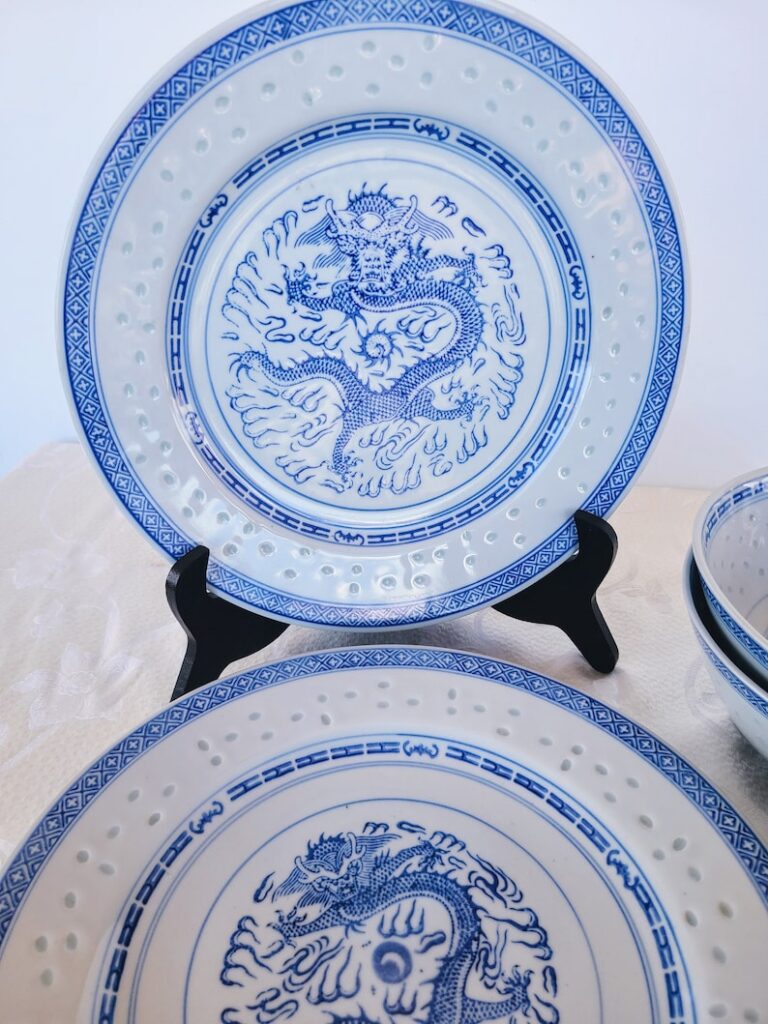
For the table, the Rice-Grain Blue & White Dragon Plates are listed as a set of four; check the product page for the current listing details. For styling ideas, see our blue-and-white dragon décor guide. Orders over $59 ship free and tracked, and anything that arrives broken is replaced or refunded.
Frequently asked questions
Why is it called rice-grain porcelain?
Because the small openings cut into the wall are shaped like grains of rice. In Chinese the ware is called linglong, meaning delicate and finely pierced.
Does rice-grain porcelain leak?
No. Every opening is filled with glaze that melts into glass in the kiln, so a properly made piece is as watertight as any other porcelain.
Is linglong the same as openwork porcelain?
No. Openwork (reticulated) porcelain leaves its holes open, so it is purely decorative. Linglong seals its openings with glaze, which is what makes it usable for tea and food.
Why do the grains look greenish?
The glaze inside each opening is much thicker than the layer on the rest of the piece, so its natural tint shows. It usually looks pale blue-green against the white body.
Is rice-grain porcelain food safe?
Food-contact suitability depends on the materials and glaze of the particular piece, rather than the rice-grain pattern alone. Check the intended use and care information for that piece. We do not hold third-party lab certificates for these listings.
Where is rice-grain porcelain made?
It is most closely associated with Jingdezhen, where it is one of the city’s signature wares. Read more about the city in what makes Jingdezhen porcelain special.