Quick answer: Underglaze decoration is painted on the raw clay, covered with clear glaze and fired once at high temperature, around 1,300 °C, so the colour is sealed under glass and won’t wear off. Overglaze decoration is painted on top of a piece that has already been glazed and fired, then fired again much cooler, typically around 700–850 °C. The cooler firing allows a far wider palette, including the pinks, greens and yellows of famille rose and gold, but the colour sits on the surface and needs gentler care.
Both techniques come from the same kilns in Jingdezhen, and a single piece can use both. Knowing which one you’re looking at tells you how a piece was made, how it will age and how to wash it.
Underglaze: painted first, fired hot
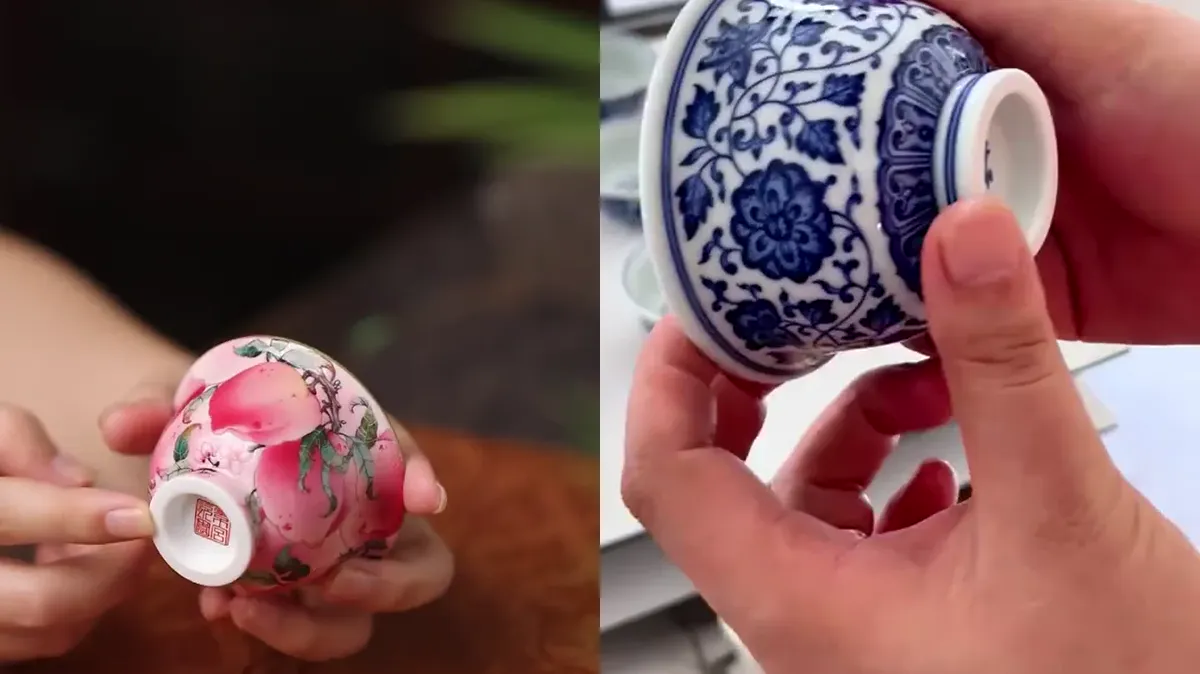
Blue-and-white is the classic underglaze. Cobalt pigment is painted on the unfired body, the piece is glazed, and one high firing turns the pigment blue and locks it under the glaze. Our guide to how blue-and-white porcelain is made shows every stage on video. Only a few colours survive that heat, mainly cobalt blue and copper red (youlihong, 釉里红), so traditional underglaze palettes are restrained. The advantage is durability: with the colour under the glass, cutlery, tea and washing can’t touch it.
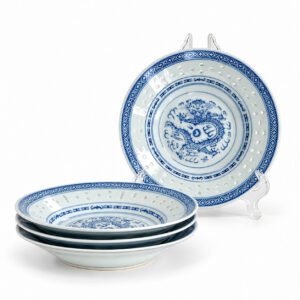
If you are comparing patterns as well as decoration, our rice-grain porcelain (linglong) guide explains what to look for in pieces with translucent grain patterns.
Overglaze: painted on top, fired again
Overglaze painters work on a piece that has already been glazed and fired. Enamels (finely ground coloured glass mixed with a medium) are brushed onto the glossy surface. The piece then goes back into the kiln at a much lower temperature, just hot enough to fuse the enamels to the glaze. Gold rims and gold details are applied the same way, over the glaze, and fired on at low heat.
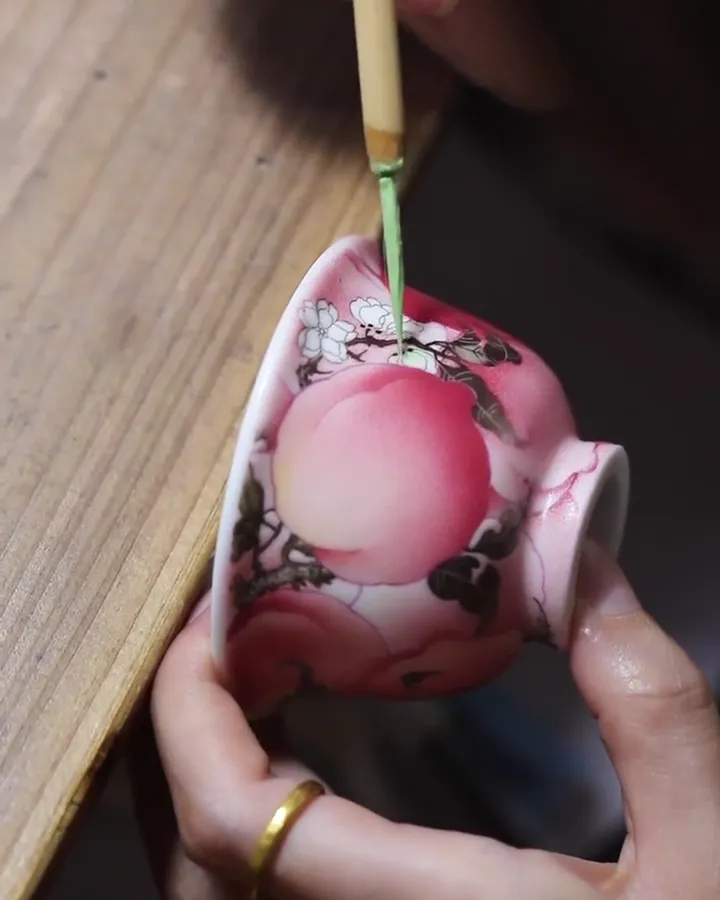
Famille rose (fencai, 粉彩) is the best-known Jingdezhen overglaze style. A layer of opaque white enamel lets the painter shade petals and peaches from deep pink to almost white, something underglaze can’t do. Other styles mix the two techniques. Doucai (斗彩) outlines the design in underglaze blue, then fills it with overglaze enamels after the first firing. Canton famille rose (guangcai, 广彩) is an overglaze tradition known for dense borders and plenty of gold.
Overglaze painting at a Jingdezhen workshop we buy from: pink and green enamels brushed onto a glazed peach cup (2:02, no sound).
How to tell overglaze from underglaze: five checks
- Touch it. Run a fingertip across the design. Over underglaze painting the glaze is continuous and smooth. Overglaze enamels often have a faint raised edge, and thick enamels can feel like tiny steps.
- Tilt it under a lamp. Underglaze sits under one continuous shine. Overglaze colours often catch the light differently from the glaze around them, looking slightly glossier or slightly more matte.
- Read the palette. Bright pinks, yellows, greens and gold usually mean overglaze, because those colours don’t survive a high firing. Blue, and sometimes red, under an even glaze points to underglaze. (Multicoloured underglaze does exist — Liling in Hunan is known for it — but it is the exception.)
- Check the wear points. On a piece that has been used, rims, handles and the highest points of the pattern show wear on overglaze colours and gold first. Underglaze doesn’t rub off.
- Look at the edges. Underglaze blue often has soft, slightly hazy edges where the pigment spread into the glaze during firing. Overglaze enamels keep crisp edges and sit on top.
Why it matters: caring for each
| Underglaze | Overglaze and gold | |
|---|---|---|
| Where the colour sits | Under the glaze | On top of the glaze |
| Firing | One high firing, about 1,300 °C | An extra low firing, about 700–850 °C |
| Palette | Mainly cobalt blue and copper red | Almost any colour, plus gold |
| Wear | Doesn’t rub off | Can wear on rims and high points |
| Washing | Hand washing recommended for thin porcelain | Hand wash only, no abrasive pads, no dishwasher |
| Microwave | Check the product listing | Never with gold or metallic trim |
The rule of thumb: the more colour and gold sits on the surface, the gentler the wash. Dishwasher detergent is mildly abrasive, and over time it dulls enamels and gold, so we recommend hand washing either way. Our porcelain cup care guide covers the details.
Examples in our shop
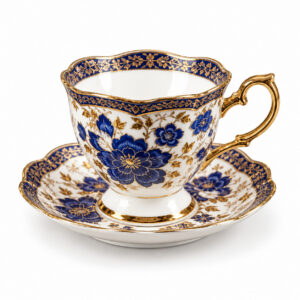
For gold over the glaze, look at our bone china teacups: the cobalt and gold teacup with saucer and the English blue rose teacup. Both are hand wash only and not for the microwave, because the trim is metallic. For classic blue-and-white, see the lotus gaiwan. Every product page lists the material and care for that piece. Orders over $59 ship free and tracked, and anything that arrives broken is replaced or refunded.
Frequently asked questions
Is blue-and-white porcelain always underglaze?
Traditionally, yes: cobalt is painted under the glaze. But blue can also be printed or painted over the glaze, especially on inexpensive ware. The fingertip and lamp checks above will tell you which you have.
Can overglaze decoration wear off?
Over years of use, yes, especially gold on rims and handles, and faster in a dishwasher. Hand washing with a soft sponge keeps it bright for much longer.
Which is more valuable, overglaze or underglaze?
Neither, by default. Value comes from the quality of the painting, the body and the firing. Finely shaded famille rose can take longer to paint than simple blue-and-white, and fine blue-and-white takes years of practice because a stroke on raw clay can’t be corrected.
Why is overglaze fired at a lower temperature?
Most enamel colours burn out or change at the temperatures that fire porcelain. A second, cooler firing is just hot enough to fuse them to the existing glaze while keeping the colours true.
What is famille rose?
A palette of soft overglaze enamels, pinks above all, developed in the Qing dynasty. An opaque white base lets painters shade colours smoothly. In Chinese it’s called fencai, “powdered colours”.