Jingdezhen is often called China’s porcelain capital because its clay, kilns, painters, and trade history shaped porcelain taste for centuries.
A city built around porcelain
The value of Jingdezhen porcelain is not only the object itself. It is the ecosystem behind it: clay preparation, shaping, glazing, painting, firing, and selection.
This long craft chain is why even small pieces can feel refined when the proportions and glaze are handled well.
Blue and white as a visual language
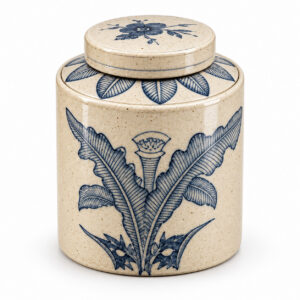
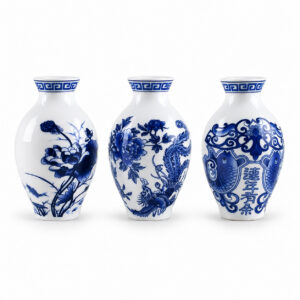
Blue and white porcelain uses cobalt decoration under a clear glaze. The result is crisp, calm, and highly recognizable, from small bowls to large jars and planters.
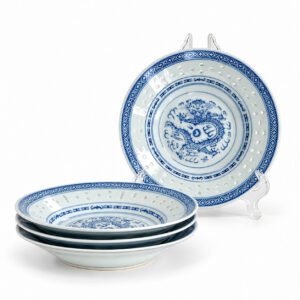
The whole process was filmed at a Jingdezhen workshop we buy from (used with permission): see how blue-and-white porcelain is made, step by step, and how it differs from painted enamel in overglaze vs underglaze porcelain. Jingdezhen is also known for rice-grain (linglong) porcelain, whose glaze-filled windows glow against the light.
How to start collecting
Begin with pieces you can live with: a tea cup, a planter, a bracelet, or a small vase. A useful object helps you understand porcelain through touch, not just display.
Related pieces from the shop
For more pieces, browse the Porcelain Charm main shop.