Good loose-leaf tea rarely goes “bad” the way milk does. It goes flat — the aroma thins, the brightness dulls, and one day you notice the jasmine smells like paper. That decline isn’t mysterious. Tea has exactly five enemies, and storing it well is nothing more than blocking all five at once. Here’s the short science, where a porcelain caddy fits, and the honest comparison with tins and glass.
The five enemies of stored tea
Air. Oxygen slowly oxidises the aromatic compounds you paid for. The more surface area exposed — broken leaf, half-empty bags — the faster it happens.
Light. UV degrades tea fast; direct sun can stale a jar of green tea in days. This is the whole argument against those pretty clear glass jars on open shelves.
Moisture. Dry leaf is hygroscopic — it drinks humidity out of kitchen air, and damp tea dulls quickly and can eventually mould. Steam from a kettle two feet away counts.
Odor. Tea absorbs smells with enthusiasm; that’s how jasmine tea is scented in the first place. Stored next to coffee or spices, it will faithfully record them.
Heat. Warmth accelerates all of the above. The shelf above the stove is the worst address in the kitchen.
Where a porcelain caddy actually wins
Glazed ceramic solves four of the five enemies outright: it’s completely opaque (light), completely odor-neutral and non-reactive (odor), impermeable to humidity through its walls (moisture), and thick enough to buffer temperature swings (heat). This is why Chinese tea shops have stored tea in ceramic jars for centuries — not aesthetics, physics.
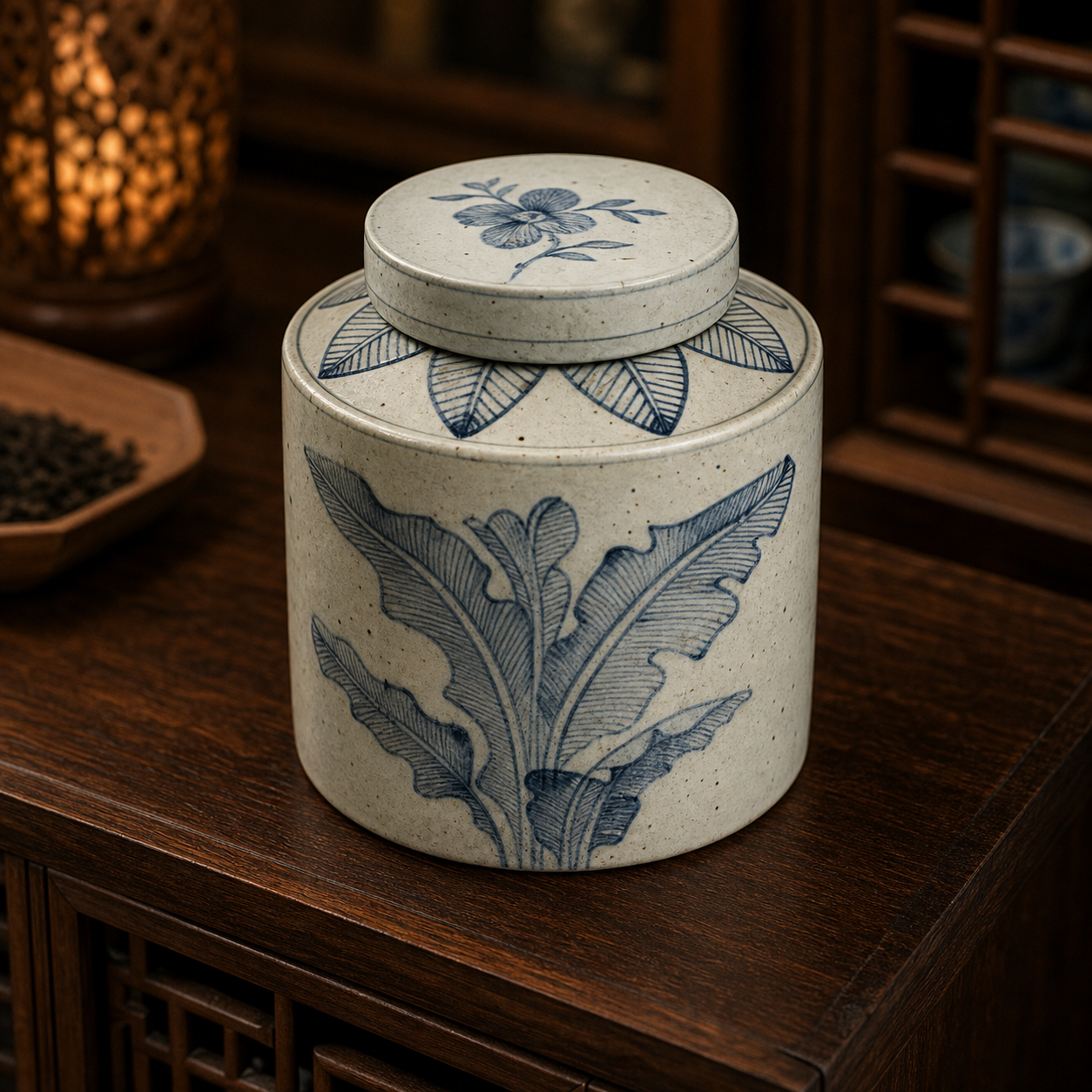
The one enemy a ceramic jar handles only partly is air: a fitted ceramic lid rests snugly, but it isn’t a vacuum seal. For how most people actually drink — a working supply you open several times a week and finish within a month or two — that matters far less than it sounds, because you’re breaking any seal constantly anyway. The practical pattern that works: keep your bulk stash sealed in its foil pouch, and decant two to four weeks of leaf into the caddy you touch daily. Our hand-painted blue-and-white jar is sized for exactly this rhythm — a wide, stable cylinder with a fitted flat lid, painted in a hand-brushed banana-leaf motif so it earns its counter space even when it’s just sitting there.
Ceramic vs tin vs glass, honestly
Metal tins with double lids seal tightest, and for delicate green teas you plan to keep past a couple of months, a good tin (inside a cupboard) is genuinely the better tool. Their weaknesses: thin walls transmit heat quickly, cheap tins can lend a metallic edge, and almost nobody wants twelve of them visible in a kitchen.
Glass jars are the worst practical choice for anything you care about — full light exposure — unless they live inside a dark cupboard, at which point you’ve given up their only advantage, which is seeing the leaf.
Porcelain caddies sit in the useful middle: near-tin protection for working quantities, zero flavor contamination, and the only one of the three you’ll happily leave in view. A jar like ours also refuses to be single-purpose — it holds coffee beans, sugar, or biscuits with equal manners if your tea habit ever changes shape.
Which teas need which storage
Not all leaf wants the same regime. Green and yellow teas are the divas: airtight, cool, dark, drunk fresh — the fridge (in a truly sealed container) is defensible for long holding. Oolongs and black teas are far more forgiving; a caddy in a cupboard or on a counter away from the stove keeps them honest for months. White teas and puer are the exception that proves the rules: they’re meant to age with a little air exchange, so a ceramic jar’s not-quite-hermetic lid is arguably the ideal home — many puer drinkers store their working leaf in exactly this kind of jar on purpose.
Caddy habits that cost nothing
Rinse a new jar, dry it fully — bone dry, overnight — before the first leaf goes in. Don’t wash it between refills of the same tea; a wipe with a dry cloth preserves the faint seasoning. If you switch tea types, then wash and fully dry. Scoop with the bamboo tool from your gongfu set rather than fingers. And station the jar at least an arm’s length from kettle steam.
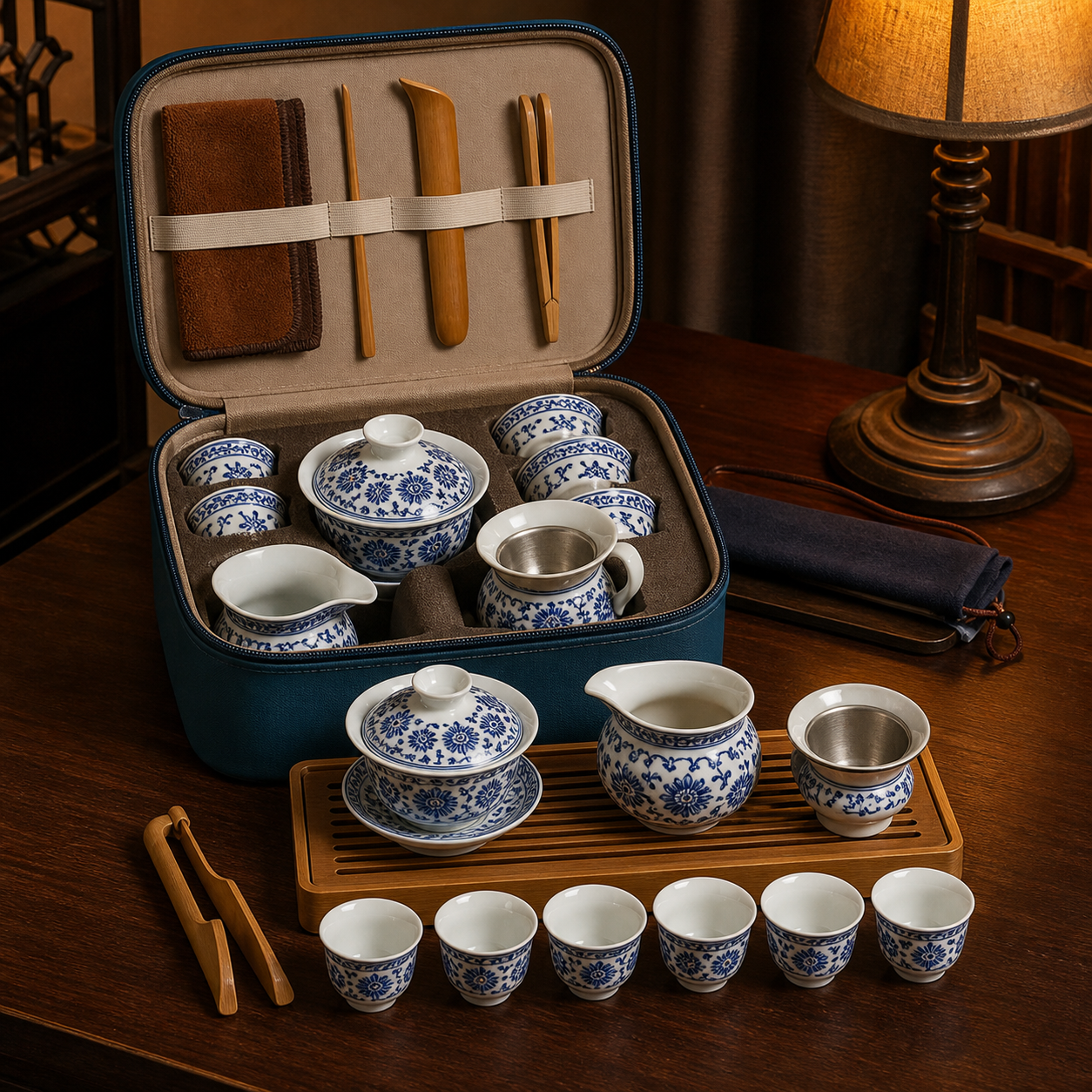
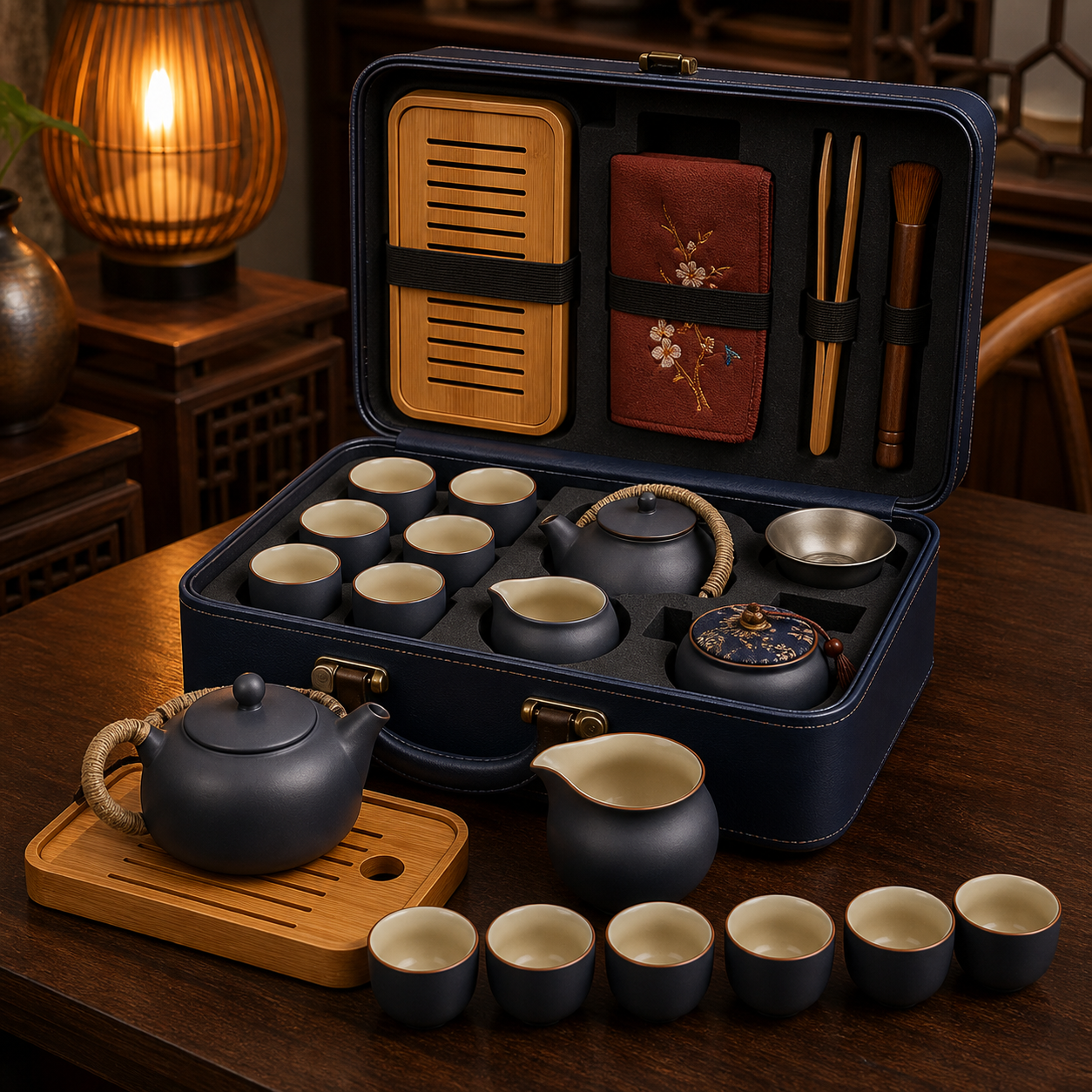
Several of our travel sets — the 14-piece cased sets in particular — include a small brocade-lidded caddy for the road; treat it as a day-trip wallet, not a vault, and refill it from the jar at home.
Quick answers
How long does loose-leaf last in a porcelain caddy? As a working container: green teas stay lively for four to eight weeks; oolong and black comfortably two to four months; puer and white indefinitely (they’re aging, not declining).
Should the caddy be full? Fuller is better — less trapped air per gram of leaf. If your caddy is one-third full for weeks, decant into something smaller or just brew faster; we consider this medical advice.
Can I keep the caddy on an open shelf? Yes — that’s the point of opaque walls. Just keep it away from the stove and direct sun-heated spots. For styling ideas around blue-and-white pieces, see Blue and White Porcelain for Home Styling.
The jar from this article — and the cased sets whose caddies it refills — are below.