Most glazes are a promise: the cup you order is the cup you get. Kiln-change glazes — yaobian (窑变) in Chinese, often called flambé in the West — break that promise on purpose. The potter controls the recipe and the firing; the kiln decides the final painting. Two cups glazed from the same bucket, fired on the same shelf, come out visibly different. That unpredictability is not a defect. It’s the entire point, and Chinese potters have prized it for about a thousand years.
What actually happens in the kiln
A flambé-type glaze is loaded with metal oxides — classically copper, often with iron — that are acutely sensitive to two things: temperature and oxygen. When the kiln atmosphere is starved of oxygen (a reduction firing), copper that would fire green in open air turns blood-red and violet; where a draft of oxygen sneaks back in, it flashes blue and turquoise. Thick pools of glaze cool into different crystals than thin edges. The result is streaking, mottling and starbursts that map the invisible weather inside the kiln — which is why no firing repeats.
The tradition goes back to Jun ware of the Song dynasty, whose sky-blue glazes flushed with purple where copper concentrated, and was pushed further by Qing dynasty flambé wares. Modern studio potters get more consistency than their ancestors did, but “more consistent” still means every piece is one of one.
Kiln-change vs reactive glaze: what’s the difference?
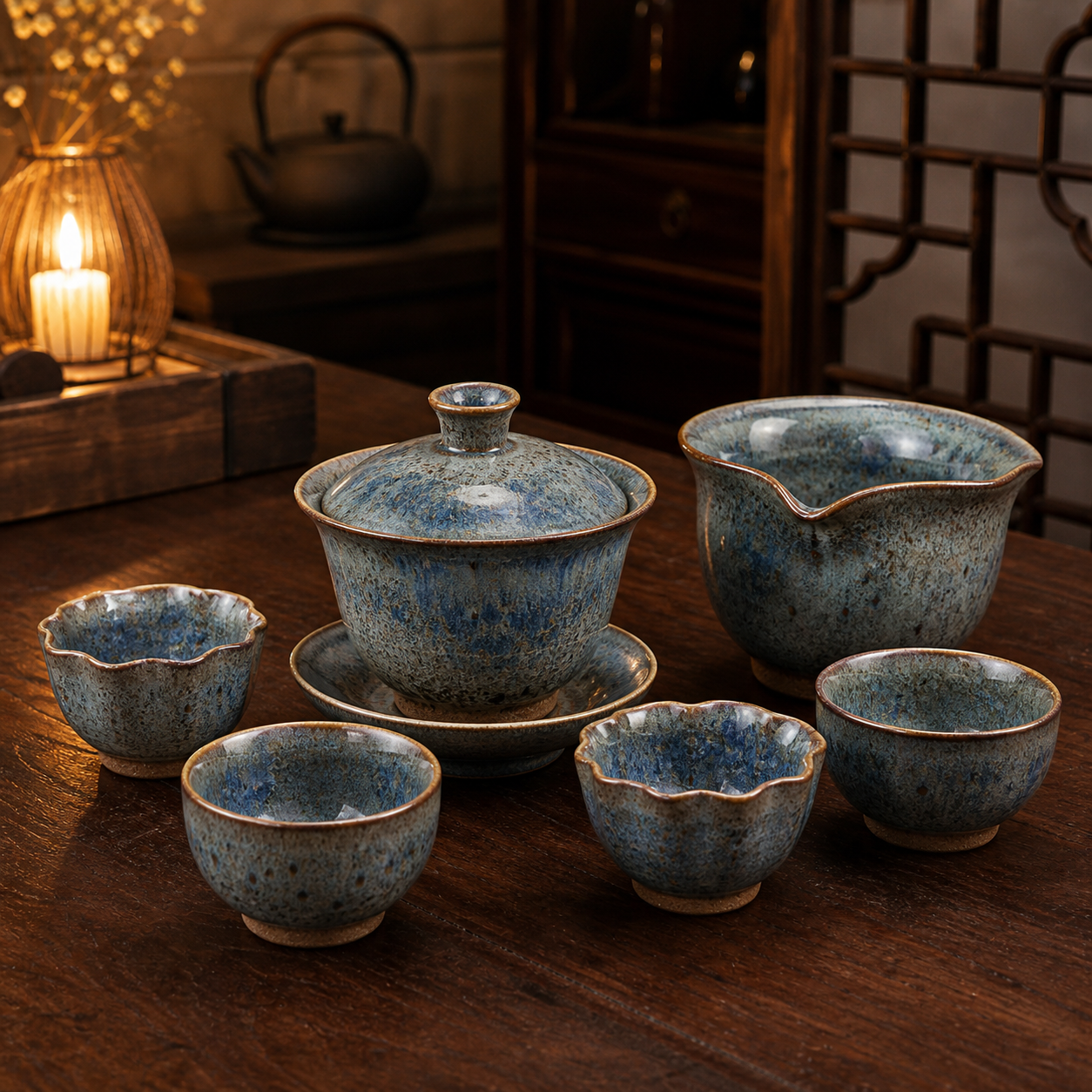
You’ll see both terms on our product pages, and the honest distinction is a matter of degree. Reactive glazes respond to thickness and temperature — pooling darker in hollows, breaking to rust-brown where the glaze thins over a rim — but within a broadly predictable palette. Our rustic blue stoneware set is a good example: every set pools slate-blue in the hollows and breaks to rust at the edges, but the exact pattern of speckle and drift is unique to each firing.
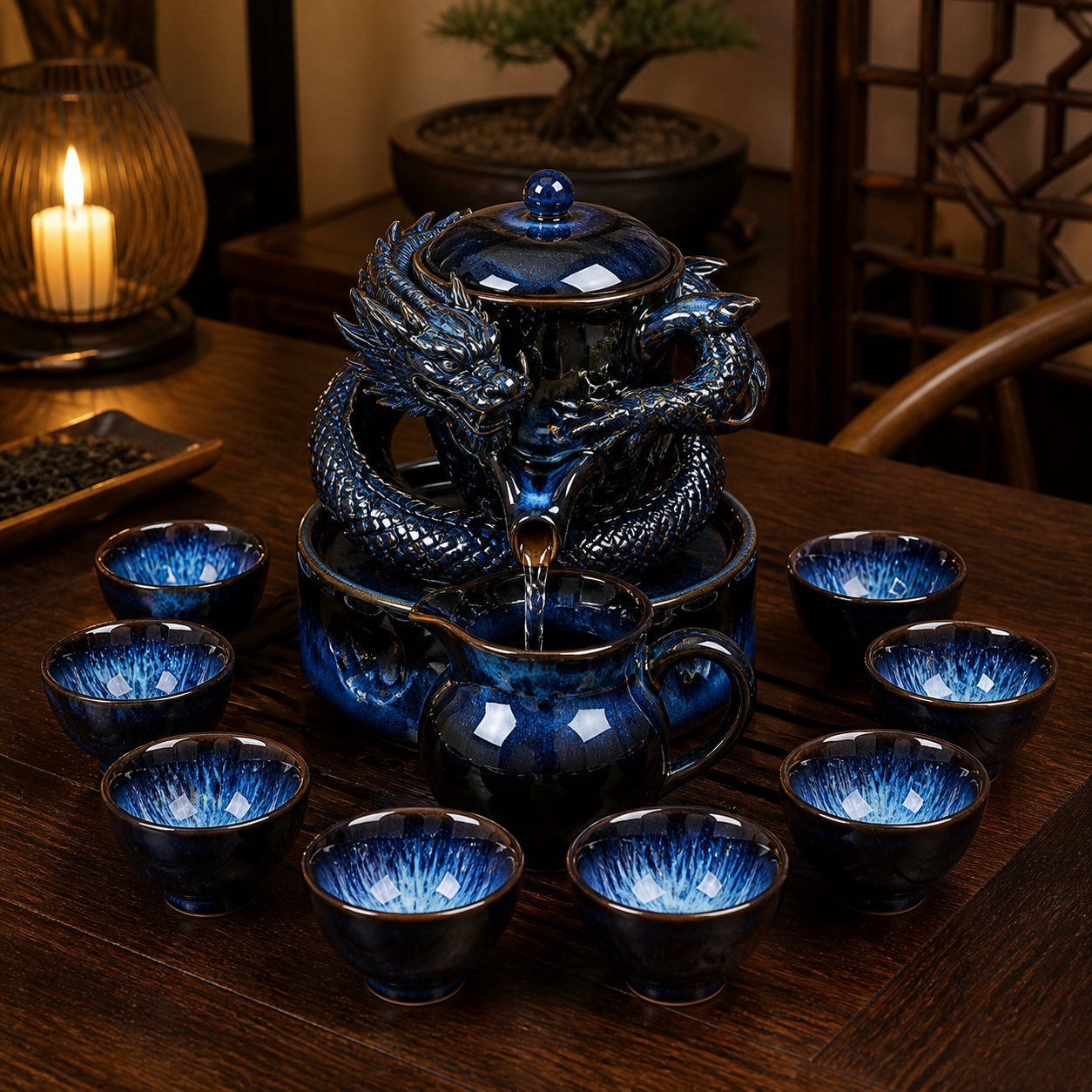
Flambé / yaobian proper involves that copper-driven transformation: colors that shift between midnight blue, violet and ice-white within a single cup, often with the crystalline “starburst” bloom in the bowl. The interiors of the cups in our cobalt dragon set do exactly this — hold one up to the light and the bottom looks like a nebula. Between eight cups, no two starbursts match.
Why collectors accept — and chase — the lottery
With a hand-painted blue-and-white jar, you’re buying a painter’s skill. With yaobian, you’re buying a controlled accident, and the appeal is closer to natural stone than to decoration: the pattern happened, it wasn’t drawn. In Chinese tea culture, this carries a quiet philosophical weight — the kiln contributes something the potter can’t dictate, so each piece records a moment that won’t recur.
Practically, it means the photos on a product page are honest examples rather than exact previews. We say this plainly on every listing: your set will match the glaze family and the form, and its particular blues will be its own. If identical matched sets matter to you, a classic blue-and-white porcelain pattern is the better choice — the lotus scrollwork on our 14-piece gongfu set repeats faithfully because it’s painted, not fired into being.
Living with reactive and flambé glazes
Care is less delicate than the drama suggests. These are fully vitrified, food-safe glazes over stoneware or porcelain bodies.
Washing: warm water and a soft sponge. Skip abrasive powders and steel wool — they won’t strip the glaze, but they’ll dull the glassy micro-texture that makes the color read deep.
Staining: the varied surface actually hides tea tannin better than plain white porcelain. If a matte patch picks up color, a paste of baking soda lifts it gently.
Thermal habits: avoid pouring boiling water into a cup straight from a cold cupboard in winter. That advice applies to all ceramics; crackle-prone artistic glazes just deserve the courtesy more. Our general routine is in How to Care for Ceramic Cups.
Raw clay details: pieces like the rustic blue set leave the foot ring unglazed so you can see the dark stoneware body — a deliberate look. Dry it after washing; bare clay holds water longer than glaze.
Who these sets suit
Yaobian pieces are the extroverts of a tea shelf, so match them to the role. The dragon flambé set — with its fully sculpted dragon coiled over the pot and semi-automatic pour — is a centrepiece and a conversation in itself; it suits collectors, serious gifts, and anyone whose tea table doubles as theatre. The rustic blue reactive set plays the opposite part: quieter, wabi-sabi, at home in a kitchen that likes linen and raw wood. Both brew identically well; the choice is temperament.
If you’re gifting, kiln-change pieces carry a ready-made story — “no other cup in the world looks like this one” — which does half the card-writing for you. More gift pairings live in our Tea Lover Gift Set Ideas.
Quick answers
Is flambé glaze food-safe? Yes — modern reactive and flambé glazes on functional teaware are fired to full vitrification and sold as food-safe. (Antique flambé display pieces are a different matter; ours are made to be used.)
Will the colors fade with use? No. The color is in the glass itself, not on it. Decades of tea will patina the interior slightly, which most owners like.
Why do prices vary so much between kiln-change pieces? Sculptural work (like a modelled dragon), cup count, and how demanding the glaze effect is to fire all move the price. A higher failure rate in the kiln gets priced into what survives.
Both sets from this article are below — each listing shows several angles of the actual glaze family, and repeats the honest note that your firing will be your own.