The first time you see a full gongfu tea set laid out — fourteen pieces, each with its own slot in a fitted case — it looks like equipment for a profession you haven’t trained in. It isn’t. Every piece answers one practical problem that comes up when you brew loose-leaf tea in short, repeated infusions. Once you know what each one does, the set stops being intimidating and starts being obvious.
This guide walks through a 14-piece set piece by piece, explains which items you can genuinely skip, and helps you decide between a cased travel set and a tray-based set for the table.
The brewing core: gaiwan, fair cup, strainer
Three pieces do almost all of the work.
The gaiwan — a lidded bowl on a saucer — is the brewing vessel. You add leaves, pour hot water, and use the lid to hold the leaves back while you decant. It replaces a teapot for most Chinese teas, and because you can see and smell the leaves directly, it teaches you faster than any other brewer. If you’re weighing a gaiwan against a mug for daily use, we compared them honestly in Gaiwan vs Ceramic Mug.
The fair cup (gongdao bei, sometimes “pitcher”) is the piece newcomers misjudge. Tea at the bottom of a gaiwan is stronger than tea at the top, so you decant the whole infusion into the fair cup first, then pour into tasting cups. Everyone gets the same strength — that’s the “fairness”. It also stops your second cup from oversteeping while you drink the first.
The strainer sits on the fair cup as you decant and catches leaf fragments. With whole-leaf oolongs you may barely need it; with broken black teas it earns its slot daily. Better sets give it a small stand so it doesn’t leave wet rings on the table.
The cups: why six, and why so small
Gongfu tasting cups run tiny by Western standards — usually 30–60 ml. That’s deliberate. Short infusions are meant to be drunk hot and immediately, over many rounds, and a small cup cools to drinking temperature in seconds. Six cups isn’t a family assumption so much as a hosting one: gongfu brewing is social, and the set is built for guests. When it’s just you, use one cup and leave the rest in the case.
The tools: bamboo scoop, pick, tongs
Most 14-piece counts include a few bamboo tools. The scoop moves dry leaf from caddy to gaiwan without your fingers (skin oils cling to dry tea). The pick clears a clogged spout or unknots compressed teas. Tongs let you rinse cups with boiling water and hand them to guests without touching the rims. A folded tea towel keeps the station dry. None of these are strictly essential; all of them are the difference between brewing and scrambling.
The caddy and the tray
A lidded tea caddy keeps a working amount of leaf at hand — enough for a week or two — so your main stash stays sealed elsewhere. (Proper long-term storage is its own subject; see How to Store Loose-Leaf Tea.)
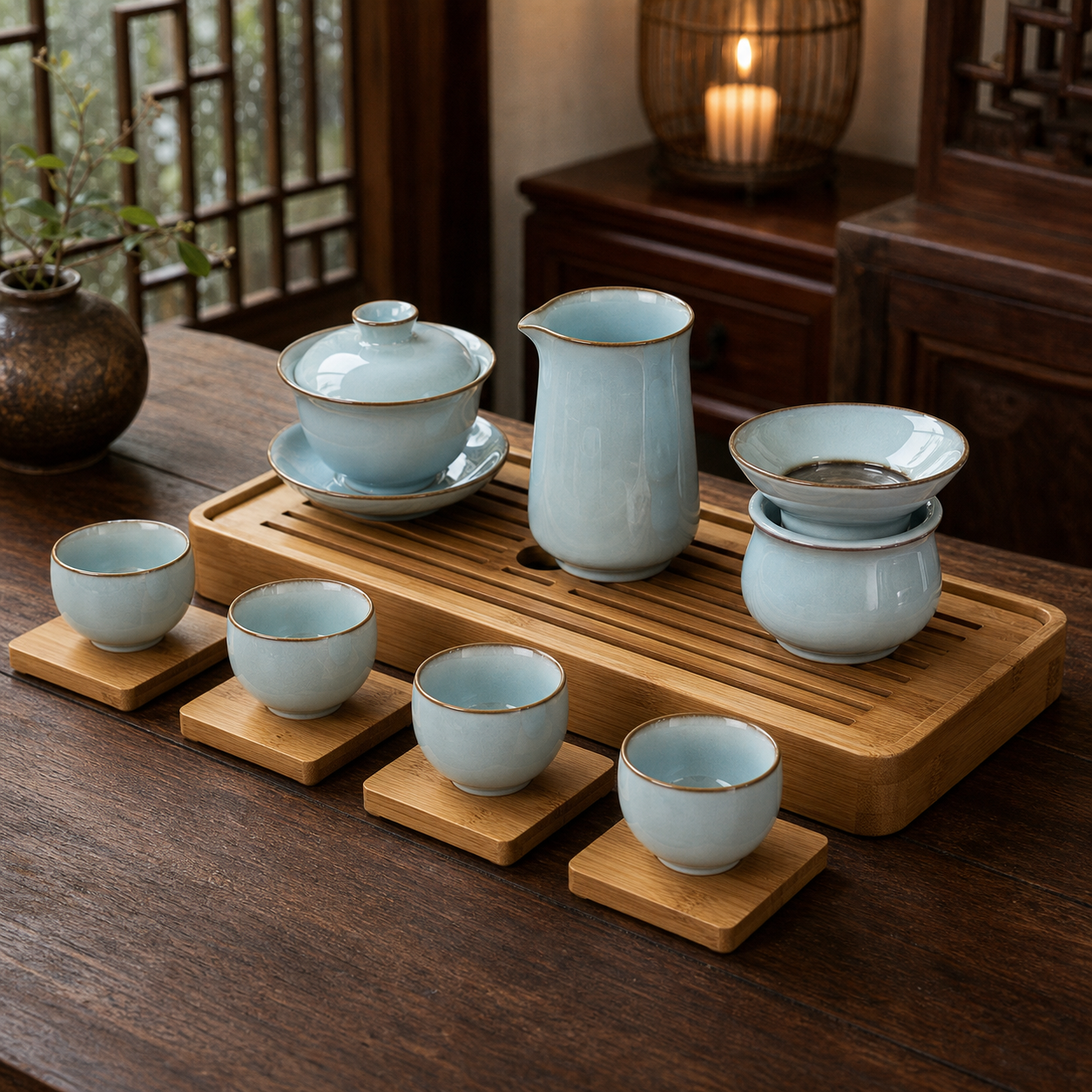
The tray catches drips and rinse water. Travel sets include a small bamboo one; table sets like our sky-blue celadon set are built around a slatted tray that drains properly during a long session. If most of your brewing happens at one table, a real tray is the upgrade you’ll feel most.
Cased travel sets vs tray sets
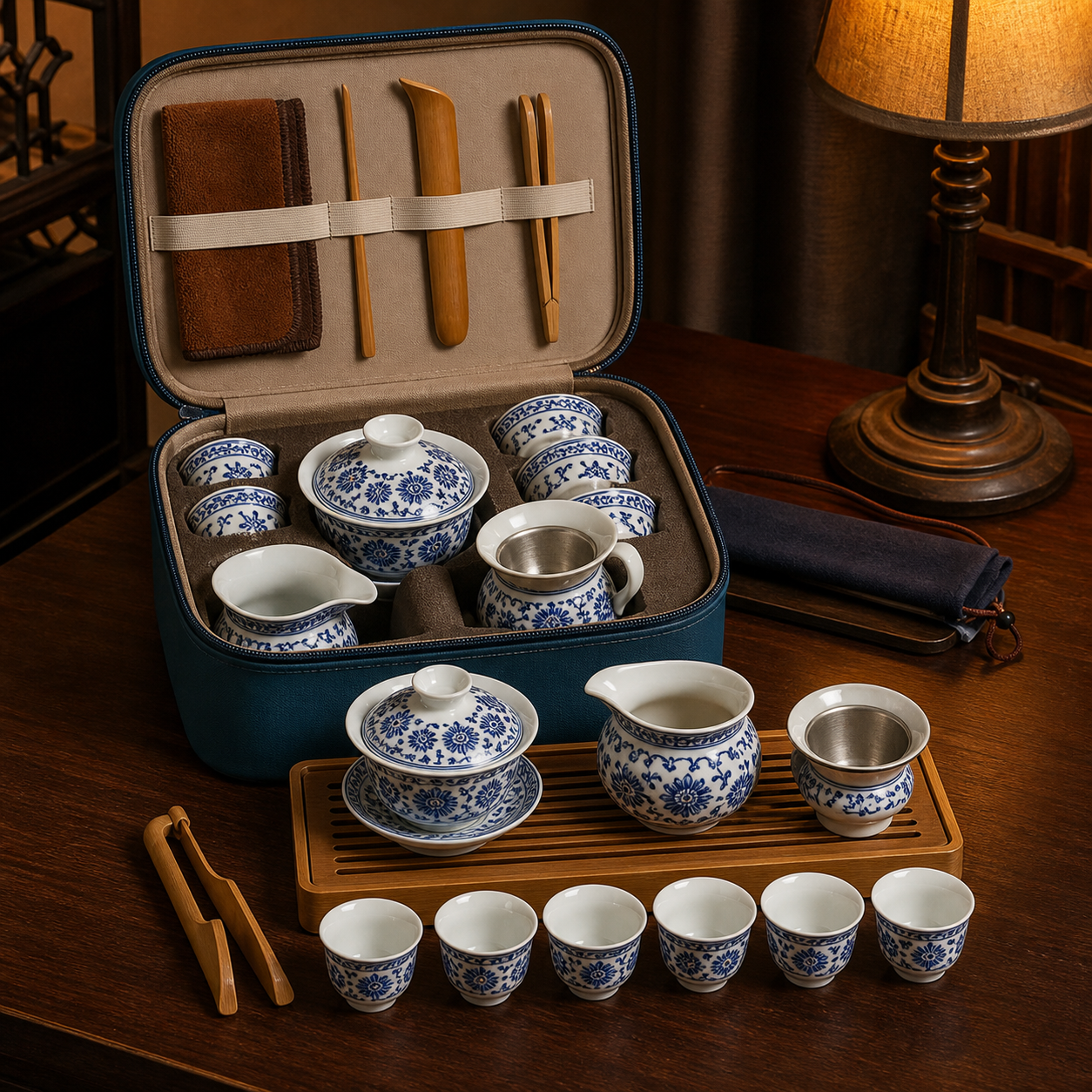
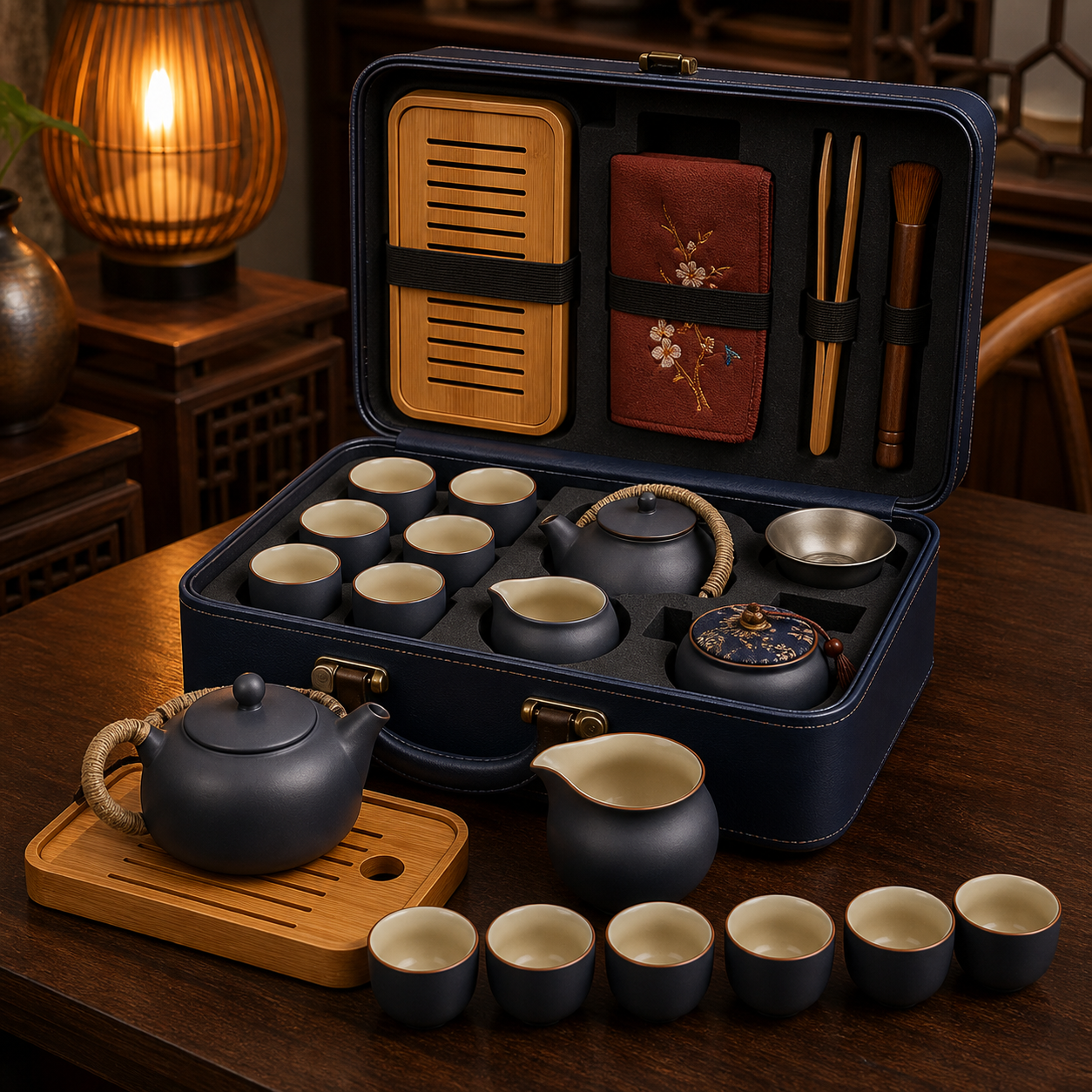
The fitted suitcase formats — like our blue-and-white porcelain set with its zip case, or the matte navy set with dense foam slots — solve storage and transport in one move. Every piece has a home, nothing rattles, and the whole ceremony unpacks in about a minute at a hotel desk or a friend’s kitchen. The trade-off: the case is the tray, and it’s small.
Tray-based sets assume a permanent spot on your counter or tea table. They look better standing still, host more comfortably, and the individual pieces tend to be a little larger. If you’re not sure which drinker you are yet, the honest answer is that a cased set travels to the table more gracefully than a tray set travels anywhere.
Do you need all fourteen pieces?
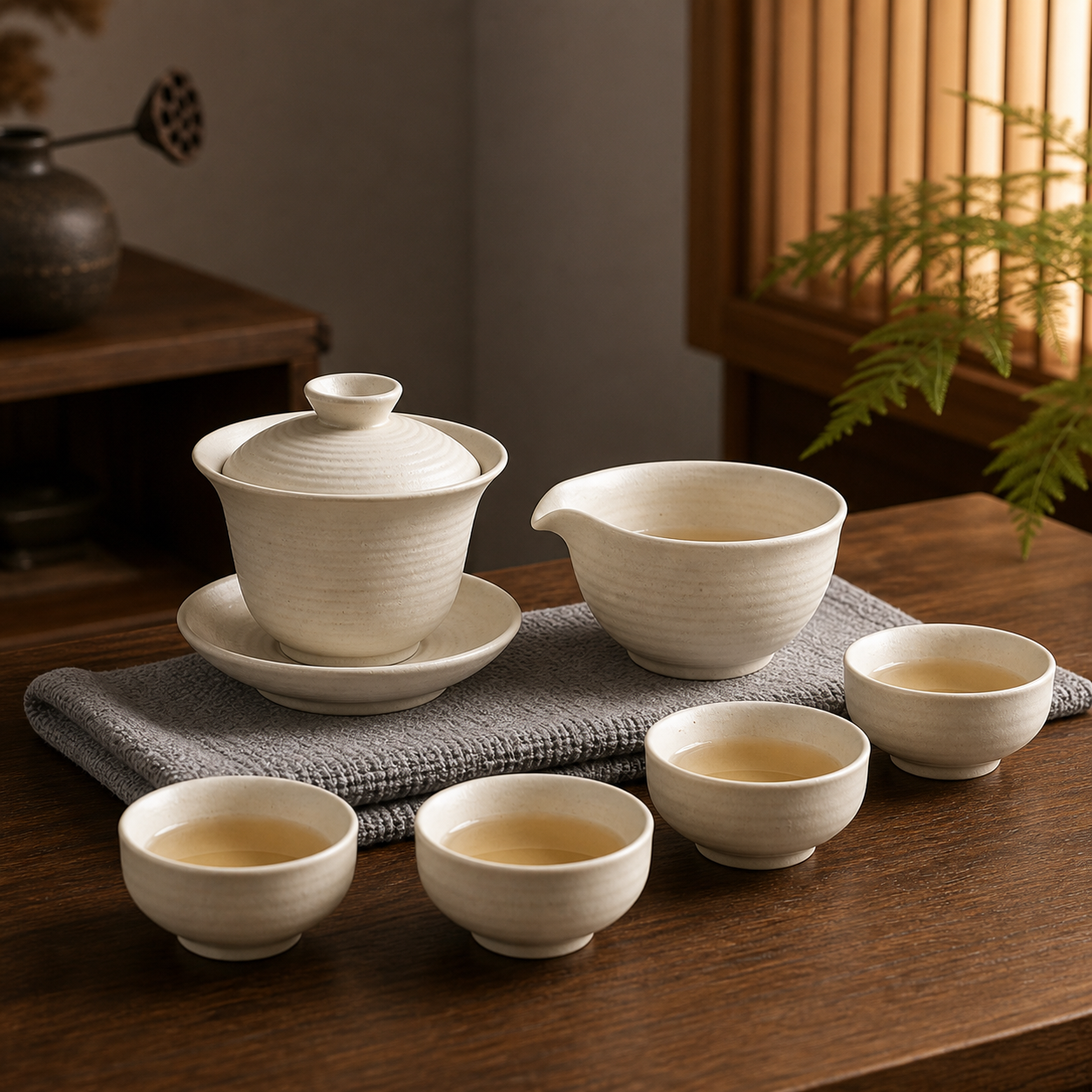
No — and it’s worth saying plainly. A gaiwan, a fair cup and two cups will brew tea indistinguishably well. That’s why six-piece sets exist, like our warm white handmade set: gaiwan, pouring bowl, four cups, nothing else. It’s the right first set if the full kit feels like commitment. The extra pieces in a 14-piece set buy convenience and hosting range, not better tea.
What we’d actually recommend: start with whichever format matches where you’ll brew. Desk or travel — cased 14-piece. Kitchen table you control — tray set or a six-piece plus a caddy. For a broader look at set styles across celadon, koi and painted porcelain, our Jingdezhen Gaiwan Tea Set Guide covers the field, and A Beginner Guide to Ceramic Tea Sets starts one step earlier.
Quick answers
Is porcelain or stoneware better for gongfu? Porcelain is neutral and shows the tea’s true character; reactive-glazed stoneware adds visual drama and hides tannin staining better. Neither is wrong — glazed interiors all rinse clean.
Can I put these in the dishwasher? We’d hand-wash. Small pieces shift in racks, and bamboo tools and brocade-lidded caddies shouldn’t be submerged long. Care habits are covered in How to Care for Ceramic Cups.
What teas suit a gongfu set best? Oolong, puer, white and better black teas — anything that improves over multiple short infusions. Green tea works too; use slightly cooler water and keep the lid ajar.
The sets mentioned in this guide are below — each product page lists exactly what’s in the box, piece by piece.