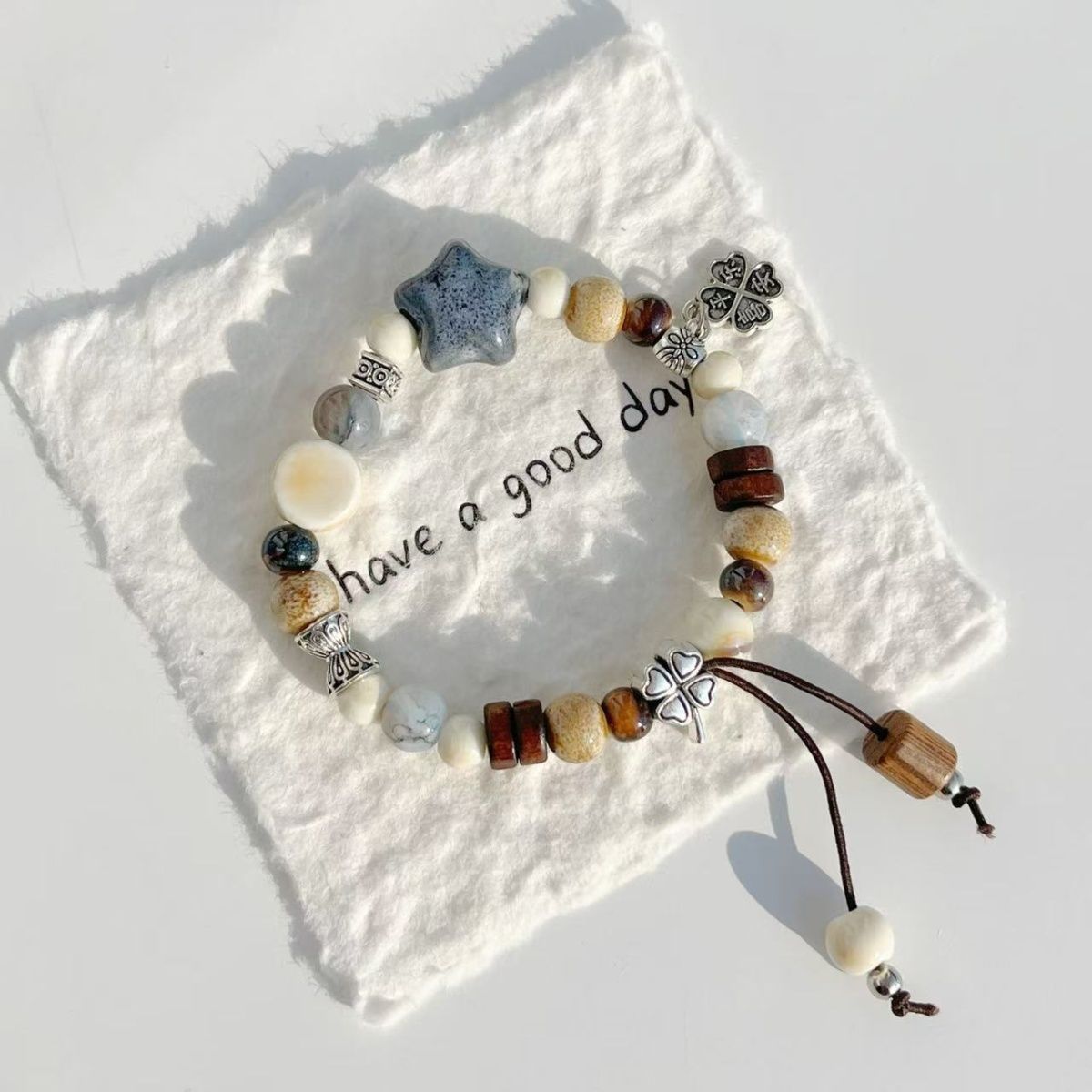
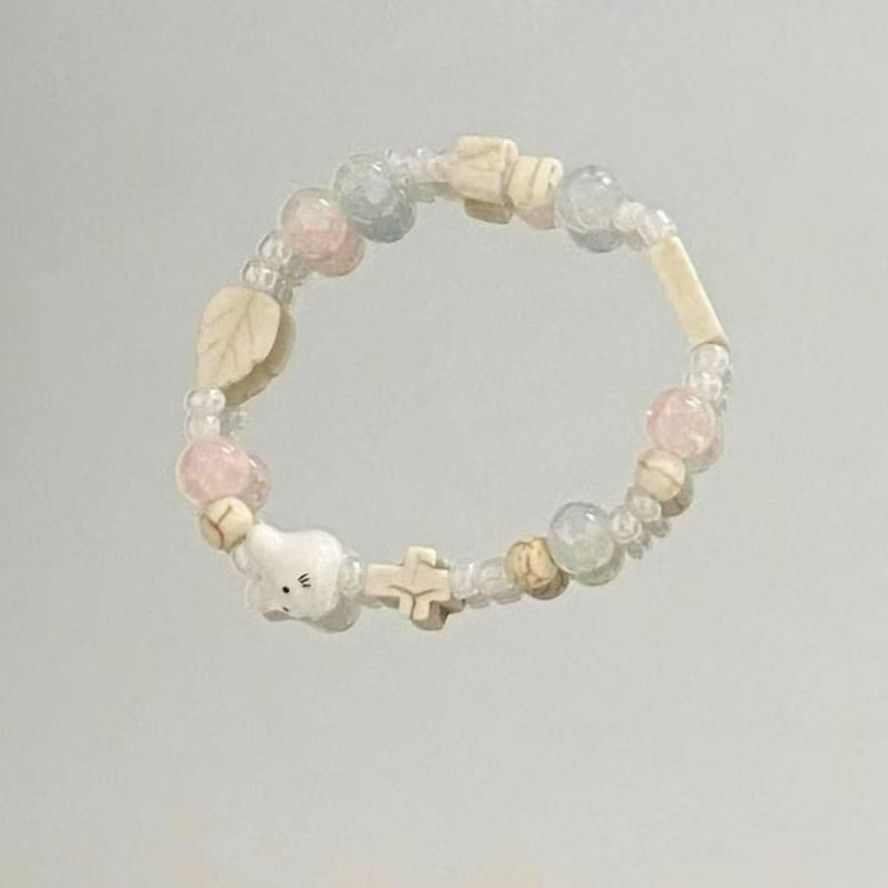
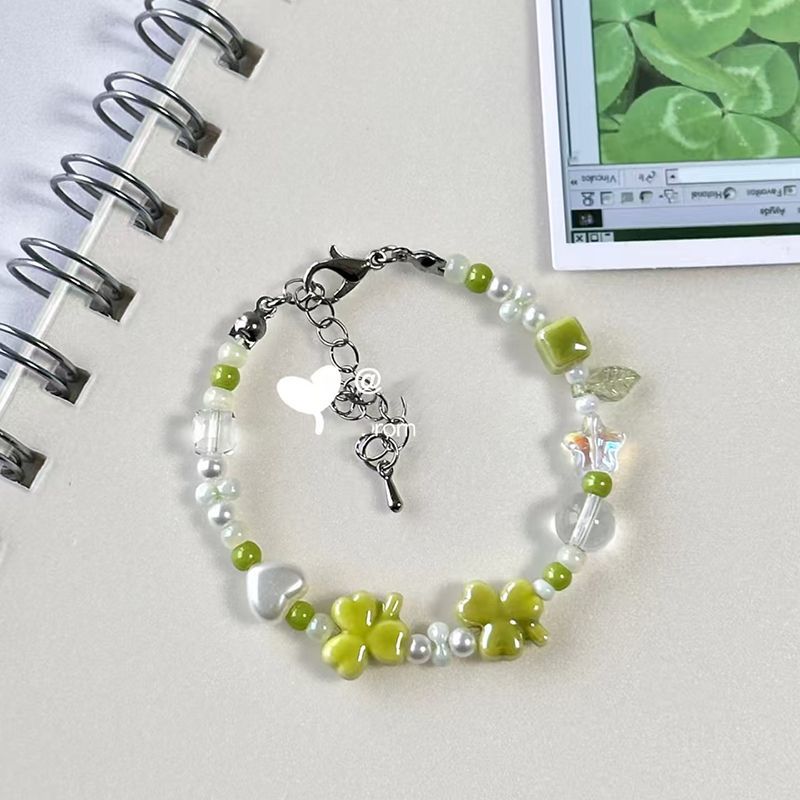
Quick answer: All porcelain is ceramic, but not all ceramic is porcelain. Porcelain is fired at roughly 1,200–1,400 °C until the clay vitrifies — turns glass-like all the way through — which makes porcelain beads harder, less porous, slightly translucent and finer-textured than ordinary earthenware ceramic. For jewelry you wear daily, that difference is real.
The one-sentence science
Clay fired low (900–1,100 °C) stays porous and soft enough to scratch — that is earthenware. Fire a finer kaolin clay hot enough and the particles fuse into a dense, glassy body — that is porcelain. Jingdezhen has been doing the second thing for about a thousand years, which is why “china” became the English word for it.
What it means on your wrist
Weight: porcelain’s density sounds heavy but works in your favour — beads are thin-walled and small, so a full bracelet typically weighs under 15 g. You forget it is on.
Durability: vitrified beads shrug off daily wear, sweat and rain. They are not indestructible — porcelain fails by chipping on hard impact, not by wearing down — so the honest care advice is one line: don’t knock it against stone counters, and it will outlast the cord.
Color: this is the quiet superpower. Glaze color is fired into the surface at kiln temperature, not coated on. A blue-and-white porcelain bead looks the same in year ten as day one. No oxidising like silver, no peeling like plated metal, no UV fading like resin.
Skin: fired glaze is chemically inert glass — no nickel, no latex, nothing to react to. If metal jewelry gives you a rash, ceramic is the easy answer.
How to spot quality porcelain beads
Look at the glaze surface: it should be glassy and even, without pinholes or rough patches. Check the stringing holes: cleanly drilled or formed holes mean the maker cared; ragged holes chew through cord. Expect variation, not defects: in reactive glazes like flambé, every bead firing differently is the feature — our flambé cube bead bracelet is deliberately one-of-a-kind piece to piece. Uniformity is for factories; kilns have opinions.
Porcelain, stoneware or “ceramic” — which should you buy?
For jewelry: porcelain or high-fired stoneware, full stop. Earthenware beads absorb moisture, stain, and eventually craze. If a listing just says “ceramic” with no firing details and a suspiciously low price, it is usually low-fired. Ours are fired and strung in Jingdezhen and we say so on every product page, with the glaze type named.
Care, in ten seconds
Wipe with a soft cloth. Take it off for the gym (impact, not sweat, is the enemy). Store it so beads don’t grind against metal jewelry. That’s genuinely the whole list — the longer version is in our ceramic jewelry care guide.
Ready to try one? Start with the handmade porcelain bracelet collection — adjustable cords fit 14–20 cm wrists, shipping is a flat $15 worldwide, and anything that arrives broken is refunded in full.